
What is Lumbar Canal Stenosis?
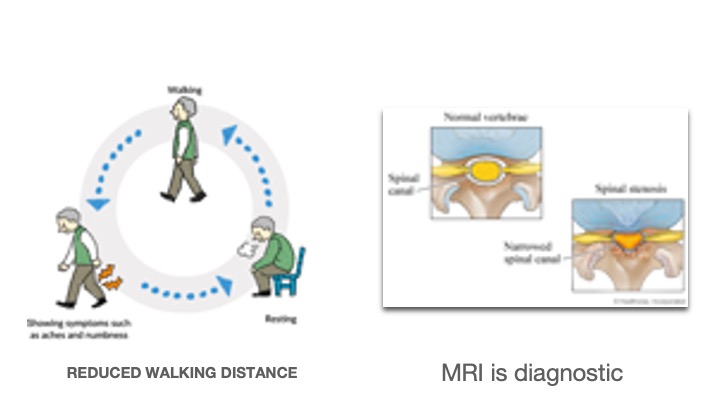
Just as one notices ageing in all fronts of body appearance at the outside, The spine ages as well, with tiny facet joints growing larger, ligaments thickening, and discs losing water and shrinking in height, with the space available for nerves shrinking as a result.
Lumbar spinal stenosis is a narrowing of the spinal canal that causes nerve compression in the lower back. While it can affect younger individuals owing to developmental factors, it is most commonly a degenerative disease that affects adults aged 60 and over.
Leg soreness or cramps can occur when standing or walking for long stretches of time. This might be due to a reduction in blood flow to the already damaged nerves, resulting in leg discomfort and numbness when the individual stands or attempts to walk. The patients usually develops a stopping posture and use support in the form of stick or walker while walking. When patients bend forward or sit down, the pain normally subsides.
The diagnosis is made by a combination of clinical examination, X-rays and MRI scans.
Treatment options vary depending on the Grade of Stenosis and Severity of symptoms.
1. Patients with mild backpain, leg pain and difficulty in walking with less than 50% reduction in Spinal dimensions on MRI needs some medicines, physiotherapy and Exercises.
2. Patients with more than 50% spinal canal compromises with minimal pain and walking difficulty are good candidates for *Spinal injections.*
3. Patients with more than 50% Spinal canal compromises and severe pain with difficulty in walking for more than a few hundred feets are good candidates for Surgeries, almost all of which can be done using *UBE technique*.